Hickock and Smith flee to Mexico
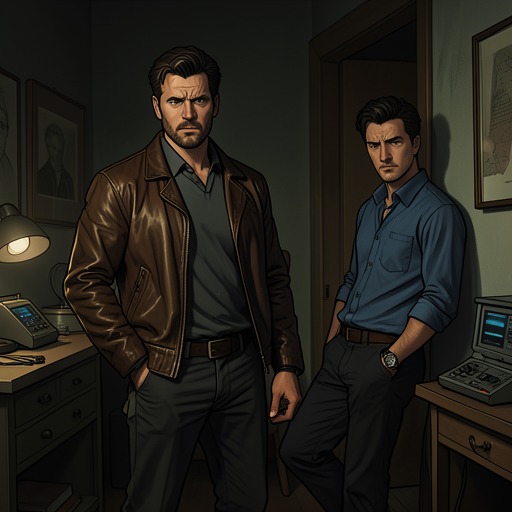
In Cold BloodHickock and Smith flee to Mexico in a flight that briefly seems to fulfill their opposing ideas of freedom, then exposes how little either man can build from it. They leave Kansas City with almost everything they own, cross into Mexico, and travel through the country on money and goods that steadily run out. Perry imagines escape as a permanent break with his old life; Dick, despite leaving family behind, soon turns toward practical plans for work and a return north. Their journey ends not in a new beginning but in a shabby Mexico City hotel, where they prepare to leave again.
Departure from Kansas
The old Chevrolet leaves Kansas City on Saturday night, November 21, loaded almost beyond use. Luggage is lashed to its fenders and roped to the roof; the trunk cannot close, and two television sets are stacked on the back seat. Dick drives while Perry clutches Perry’s Gibson Guitar, his most treasured possession. The rest of Perry’s belongings crowd the car: a cardboard suitcase, a Zenith Portable Radio, a gallon jug of root-beer syrup, and two large boxes of books, manuscripts, and memorabilia. Dick objects to the boxes, kicking and cursing them as “five hundred pounds of pig slop!” Their cramped, disorderly load makes the departure look less like a clean break than a life packed hastily into a car.
Around midnight, they cross into Oklahoma. Perry relaxes at last, glad to be out of Kansas, and regards the journey as one-way: he believes he is leaving nothing behind and nobody who will wonder where he has gone. Dick’s departure carries a different cost. He has three sons, a mother, a father, and a brother, yet he has told none of them his plans or said goodbye. He does not expect to see them again in this life. The contrast establishes the unequal emotional stakes of the escape: Perry imagines himself unattached, while Dick abandons a family he claims to love without allowing them a farewell.
Crossing into Mexico
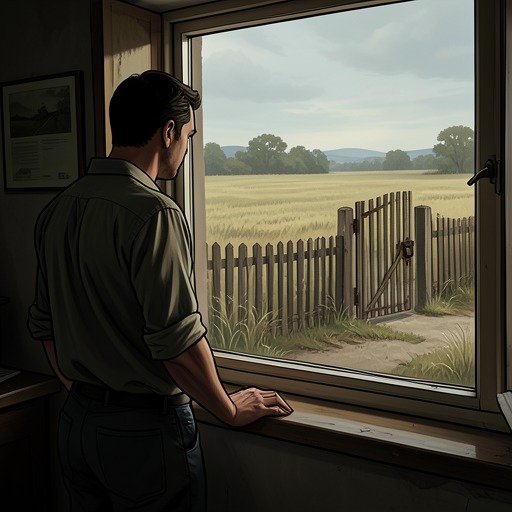
They cross the border at Laredo, Texas, on the morning of November 23, and spend their first night in a brothel in San Luis Potosí. By the time the narrative finds them picnicking on a promontory, Dick is on his second day in Mexico. He scans the mountains and a dusty village through binoculars while eating a cold, oily tortilla; they are two hundred miles from Mexico City. The wide landscape and the modest meal hold the tension of their new circumstances: the country offers distance and novelty, but not yet security or abundance.
Perry voices a sudden unease about what they have done, wondering whether something is wrong with them. The question interrupts the apparent relief of having escaped Kansas. His reaction does not undo their flight, but it shows that physical distance has not settled the moral meaning of the crime. The pair have crossed a border; they have not escaped the knowledge that travels with them.
A temporary life on the coast
After a week in Mexico City, Dick and Perry drive south through Cuernavaca and Taxco to Acapulco. There they meet Otto, a wealthy middle-aged German vacationing lawyer, and the young Mexican he calls the Cowboy. The Cowboy finds the two drifters a room at an uncle’s house and helps Perry improve his Spanish. In Otto’s company, and at Otto’s expense, they eat, drink, and buy women. Otto hires the fishing boat Estrellita each day, and the four go trolling along the coast: the Cowboy steers, Otto sketches and fishes, Perry baits hooks, daydreams, sings, and sometimes fishes, while Dick lies listlessly about, complaining of the motion.
Perry calls this life the way things ought to be, but he also knows it cannot last. Otto is due to return to Germany the next day, and Dick insists they go back to Mexico City. The money is nearly gone. They have already disposed of much of the property acquired in their Kansas City forged-check spree, including a camera, cuff links, and the television sets; Dick has also sold binoculars and a Zenith Portable Radio to a Mexico City policeman he knows. The contrast between the ease of the coastal days and Dick’s insistence on counting what remains gives the idyll a visible limit: hospitality and pleasure cannot replace income.
Money runs out and the journey turns north
Back in Mexico City, Dick sells the old Chevrolet. Slightly less than two hundred dollars remains, and most of it disappears within three days. On the fourth day, Dick goes looking for honest work. That night he reports that an expert mechanic can earn only two dollars a day and rejects Perry’s dreams of diamonds, buried treasure, and a sunken ship. The argument turns their financial failure into a conflict over what kind of future is possible: Perry’s imagined fortunes meet Dick’s brusque insistence on wages and immediate survival.
The next day Dick borrows money from the richer of his two fiancées, the widow of a prominent Mexican banker, and buys bus tickets that will take them through San Diego as far as Barstow, California. He says that after that they will walk. Perry could remain in Mexico and let Dick go alone, but the prospect makes him feel sick, like trying to jump from a train moving at ninety-nine miles an hour. He has come to believe, superstitiously, that whatever is destined to happen will not happen so long as he and Dick stay together. Dick’s contemptuous attack on Perry’s dreams also wounds him while reviving his former faith in Dick as tough, decisive, and practical. At a chilly sunrise in early December, Perry quietly packs in their unheated hotel room, careful not to wake Dick or Inez, who are sleeping on one of its twin beds. The escape has become another departure, driven by empty pockets and Perry’s fear of separating from his companion.